
Constitution Marsh Bird Walk 2026
By Young Birder, Arabella P. - September 12, 2026
On a rather cloudy, humid day, we gathered at the base of a wooded bluff alongside the Hudson River for a morning of exploration at Constitution Marsh. Constitution Marsh, nestled in Putnam County between the eastern shores of the Hudson River and Constitution Island, offered us an opportunity to explore its expansive marshes and forests, albeit on foot rather than by canoe. After welcomes and introductions, the irritated, scolding calls of a female Common Yellowthroat drew our attention as she skulked among the surrounding goldenrod and asters, seemingly assessing us. Meanwhile, the nervous chips of a few Song Sparrows added to the chorus, perhaps in response to her agitation.
Upon returning from our look at the nearby stream, which meanders through the woods and empties into the marsh, we noticed an increase in bird activity. A female Rose-breasted Grosbeak announced her presence with her distinctive squeaky-shoe call but remained elusive. A less shy Philadelphia Vireo, however, surprised us with its presence, and we watched for several minutes as it worked its way through a nearby shrubby patch of invasive and native vegetation, searching for delectable native elderberries to feast upon.
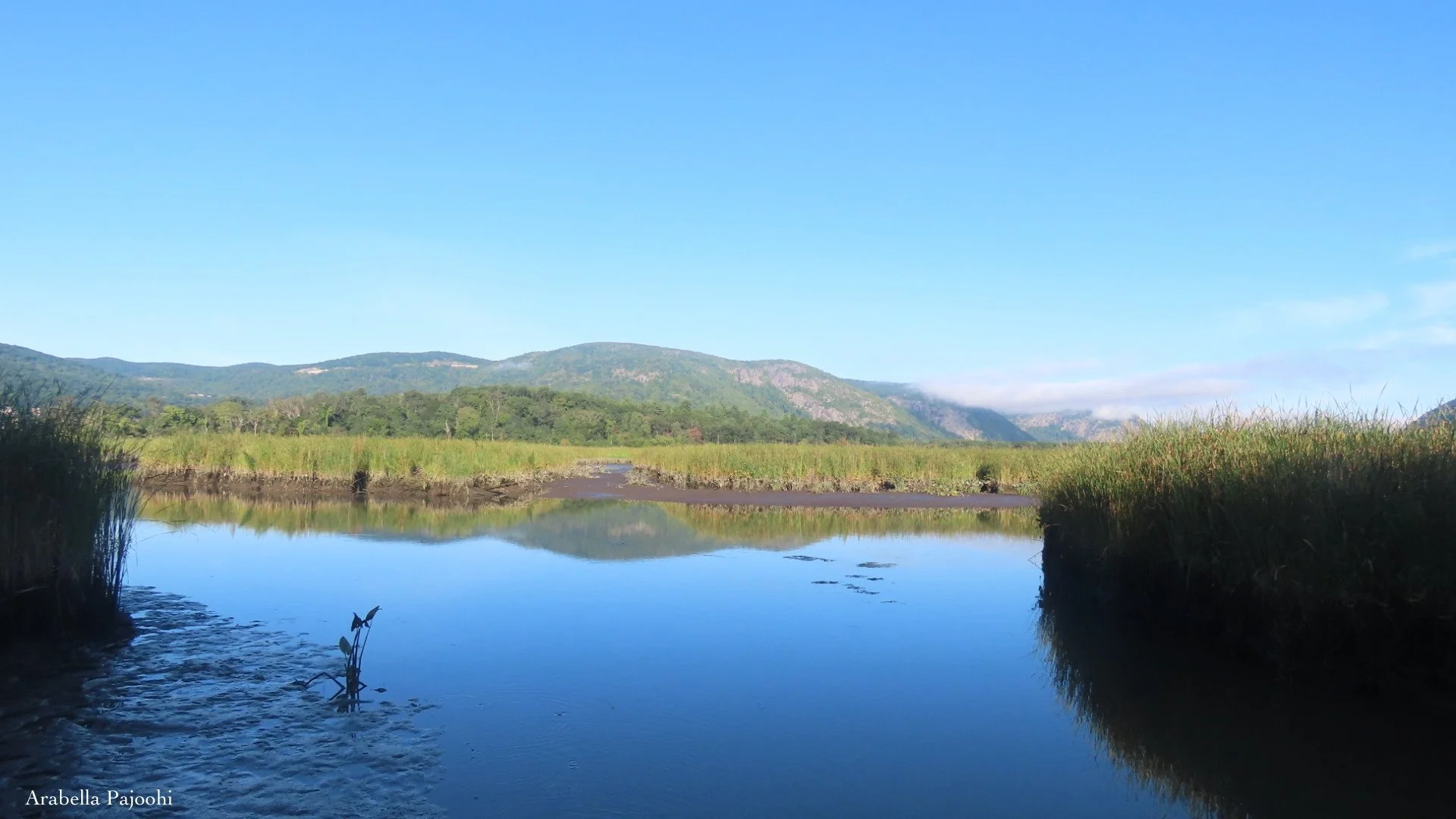
A view from Constitution Marsh
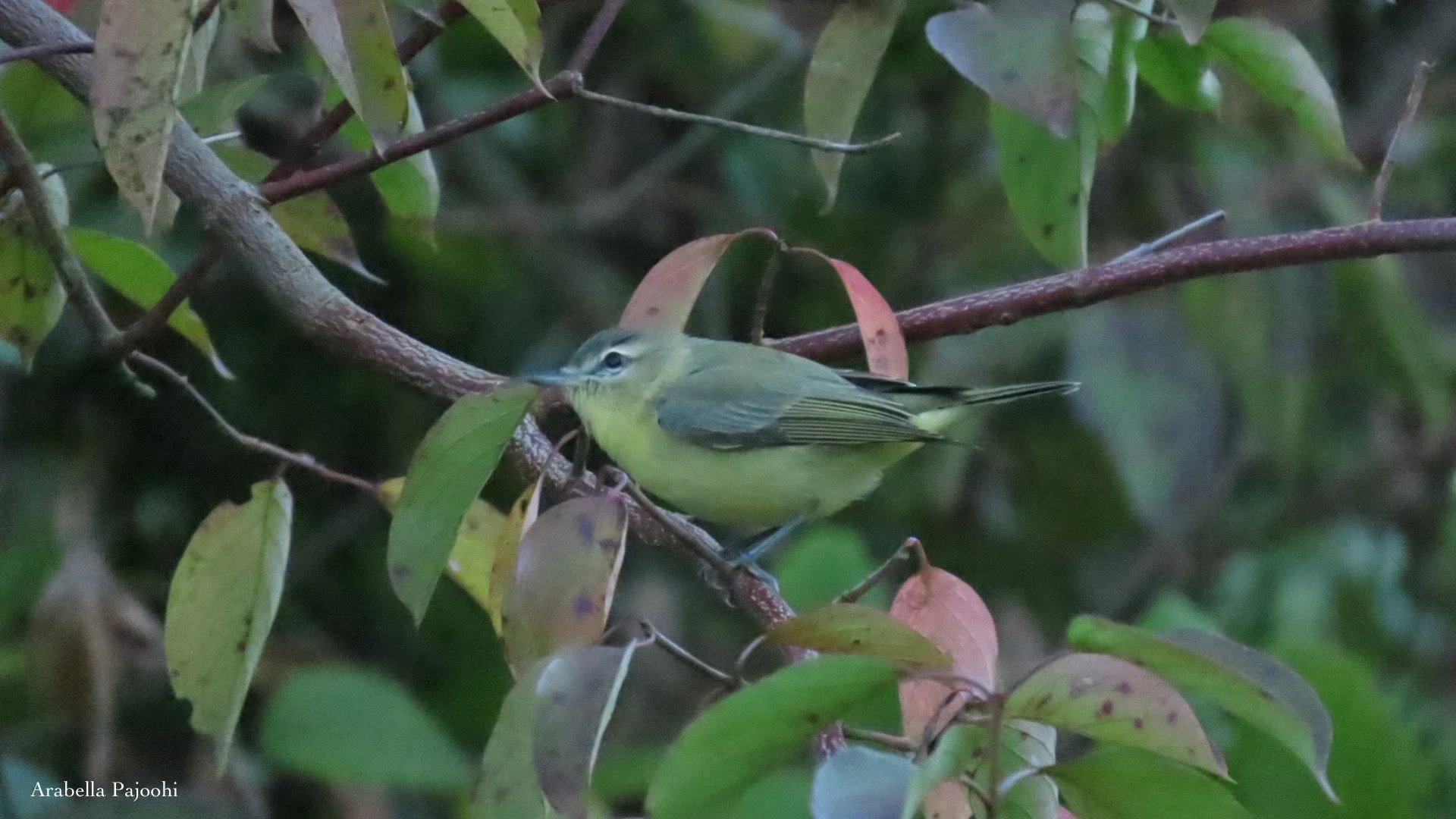
Listed as “infrequent” on eBird and labeled as one of “North America’s most obscure birds” by the Cornell Lab of Ornithology’s Birds of the World, this individual was a treat to observe, especially at such close range. Often confused with the more familiar Red-eyed Vireo because of their similar songs (and it certainly doesn’t help that Philadelphia Vireos mimic Red-eyed Vireo songs), this opportunity to view the bird up close, helped us to appreciate the distinguishing features that set it apart from the more common Red-eyed Vireo. As we observed, Philadelphia Vireos lack the gray head and distinct eye stripe of Red-eyed Vireos and sport a yellowish underbelly that, in some birds, such as the one we saw, becomes more yellow as fall approaches. We were extremely glad to have the chance to observe these plumage differentiations at such close range!
Philadelphia Vireo
As we moved on through the forest, which consisted mostly of oak and maple species, we listened to the sounds of Tufted Titmice and White-breasted Nuthatches feeding on readily available seeds. We soon reached the summit of the hill, allowing us to gaze out over the expansive marshes that stretched out beneath us, a mix of blues, beiges, and greens. Continuing on, we came to the marsh, where we were surrounded by what seemed to be a wall of cattails, some reaching over six feet high and providing crucial shelter and habitat for waterfowl, passerines, mammals, and insects alike. Although we were not greeted by the squeals or the sight of the Wood Ducks whom we had observed flying past us into the marsh during our descent, we did observe Red-winged Blackbirds flying throughout and landing on cattails, along with Great Blue Herons stealthily hunting on the shoreline. The shrill rattle of a Belted Kingfisher, likely informing us that she did not appreciate our invasion of her territory, echoed throughout the marsh. As her rattle continued, we located her with the help of a scope, perched in the distance.
We returned to our original gathering point to find that the Philadelphia Vireo that had captured our attention had moved on, and we soon followed suit. We concluded the day with thirty avian species and numerous plant species, including an abundance of Poison Ivy along with Virginia Creeper, Cattails, and Sugar Maples!
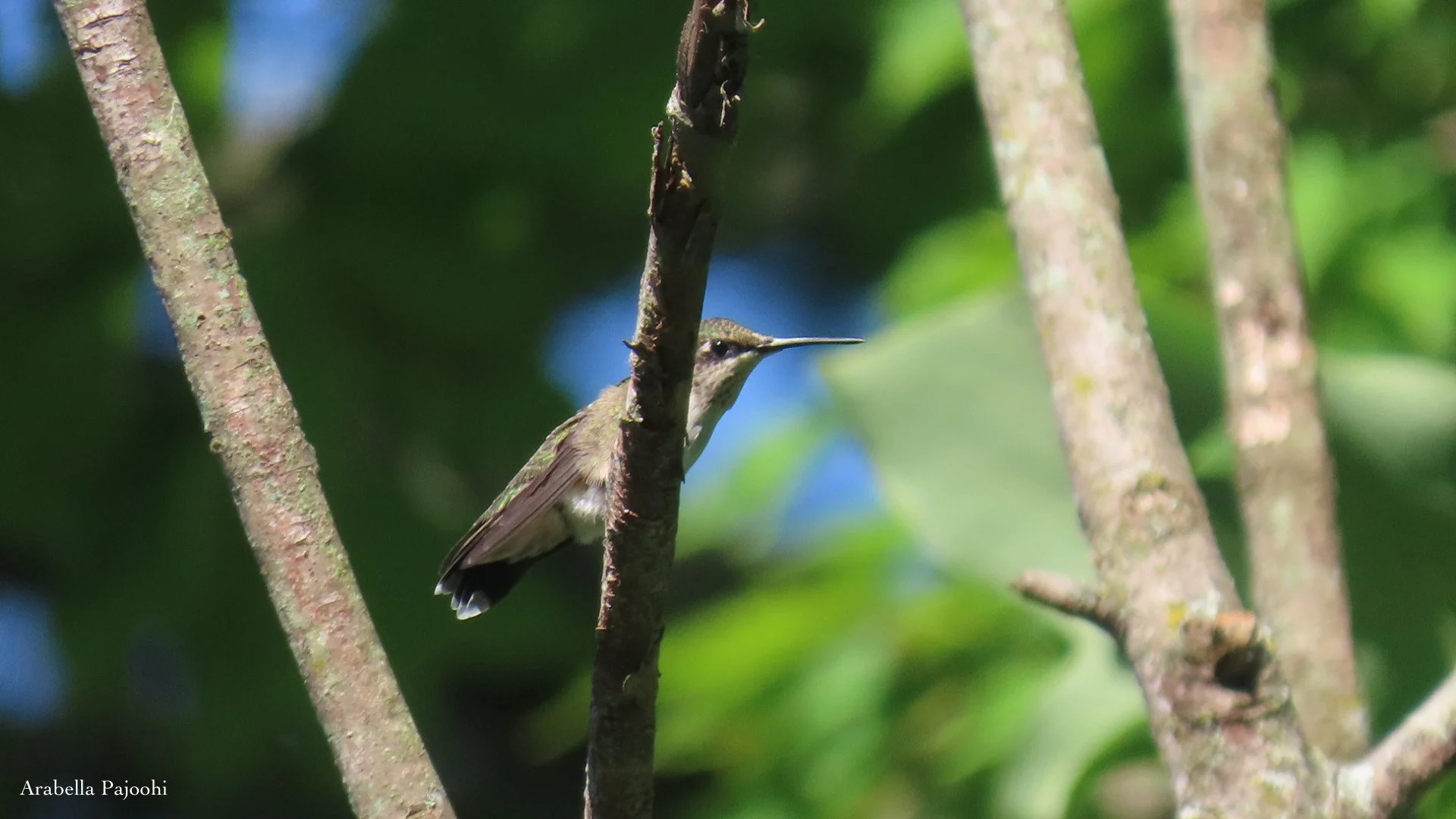
Ruby Throated Hummingbird
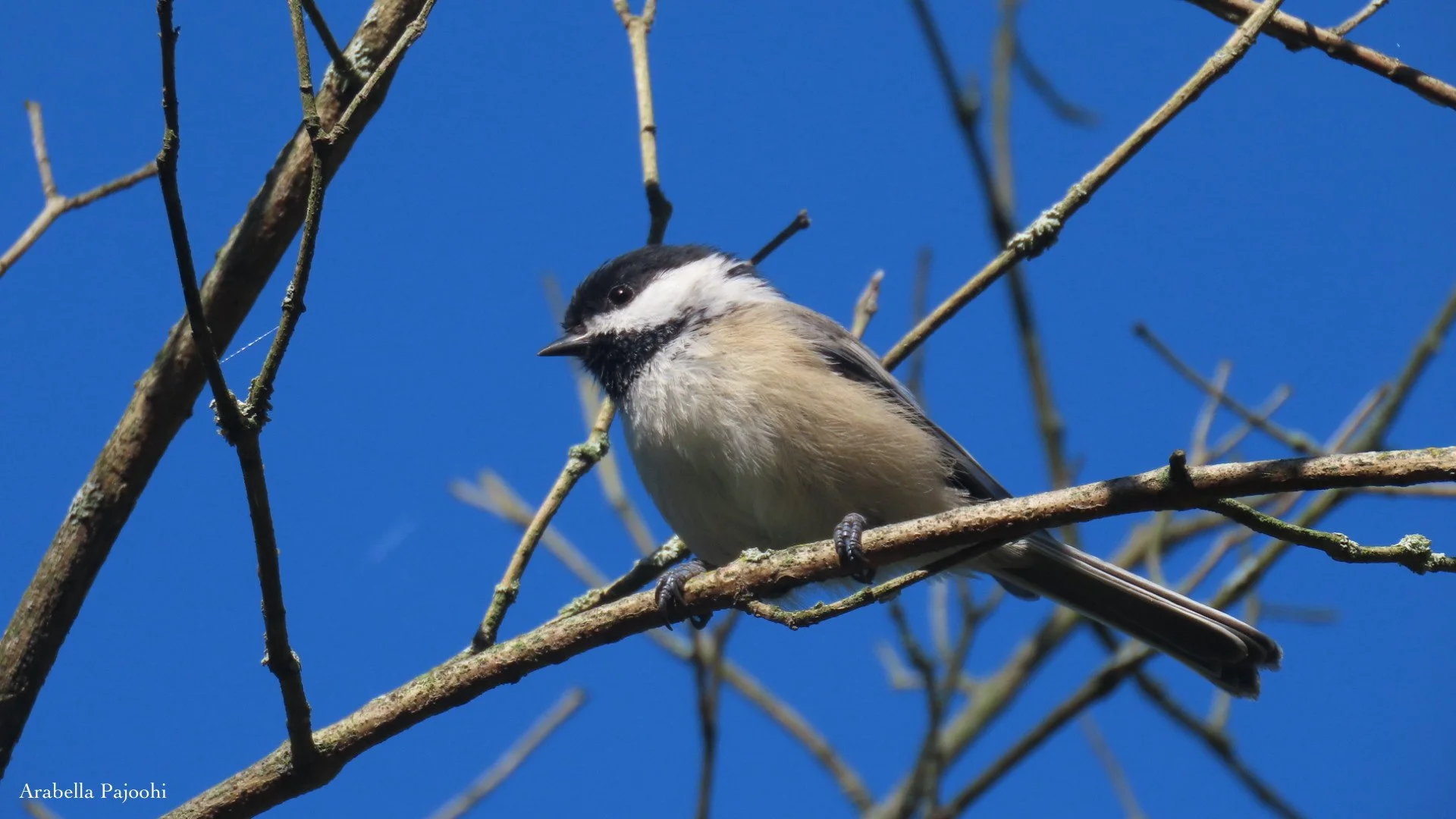
Black Capped Chickadee