
Cary Institute Bird Walk 2026
By Young Birder, Arabella P. - May 2026
We began our birding adventures on a cool and sunny morning amid the verdant fields, forest, and wetlands of the Cary Institute Lowlands, a paradise for breeding birds with its abundance of native plants and diverse habitats. As Grey Catbirds gave their “meow” calls from the nearby shrubbery, we discussed the history of the Cary Institute, from its beginnings after the death of its owner, Mary Flagler Cary—a devoted conservationist who ensured the land would be preserved—to its transformation into a botanical garden and, eventually, an ecological research center.

Tree Swallow
As we entered the grassland leading to the wetland, Field Sparrows on either side of us, perching unseen in the grasses, gave their songs reminiscent of ping pong balls dropping, while Northern Yellow Warblers sang sweet melodies and Song Sparrows skulked in the grasses, chipping softly. Approaching a weathered snag standing tall in the grassland, we were greeted by Tree Swallows, swooping and demonstrating their aerial skills, as they scolded us for nearing their nest boxes. A pair of Eastern Bluebirds, not quite as openly annoyed as the Swallows, yet far more timid, watched us closely as they collected insects for their young. We neared the forest, leaving behind the song of an Indigo Bunting and the twittering of the Tree Swallows for the warbles of the aptly named Warbling Vireos, which enveloped us. As the Warbling Vireos perched and sang above our heads, allowing us to gain better views than most of us had had in the past, the melodious and flute-like song of the Wood Thrush echoed through the trees.
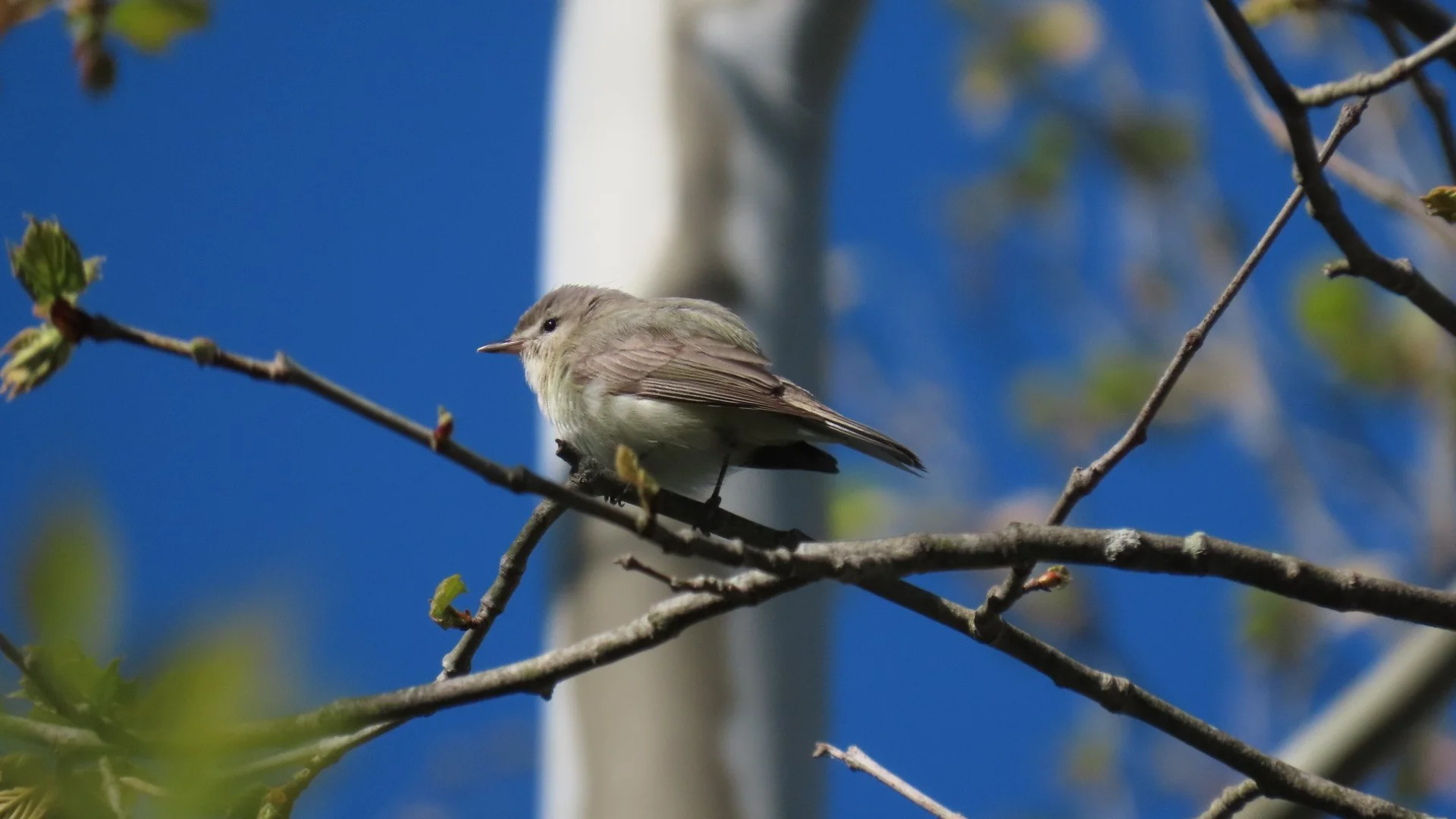
Warbling Vireo
Continuing on, we approached a stream where we came upon a family of Hooded Mergansers – eight fluffy young accompanied by their watchful mother – and a Spotted Sandpiper characteristically bobbing as it foraged. Nearby, several Common Grackles, making use of the abundant resources that stream banks provide, demonstrated their resourcefulness by foraging for insects while bathing in the shallows, often doing both in quick succession as they moved along the water’s edge. Minutes later, a trio of Bank Swallows soared overhead, their burbling, slightly buzzy calls carrying through the air. As we paused to listen to the forest, the songs of both Willow and Least Flycatchers caught our attention, offering us a chance to compare voices, the Willow’s “fitz-bew” contrasting with the Least Flycatcher’s sharper “chbek.” Moments later, a Mourning Warbler’s song sprang forth from a thicket. This skulky bird lived up to its elusive reputation, and stayed hidden within the dense foliage, offering only its song – a quick “churry … chorry” from the underbrush.
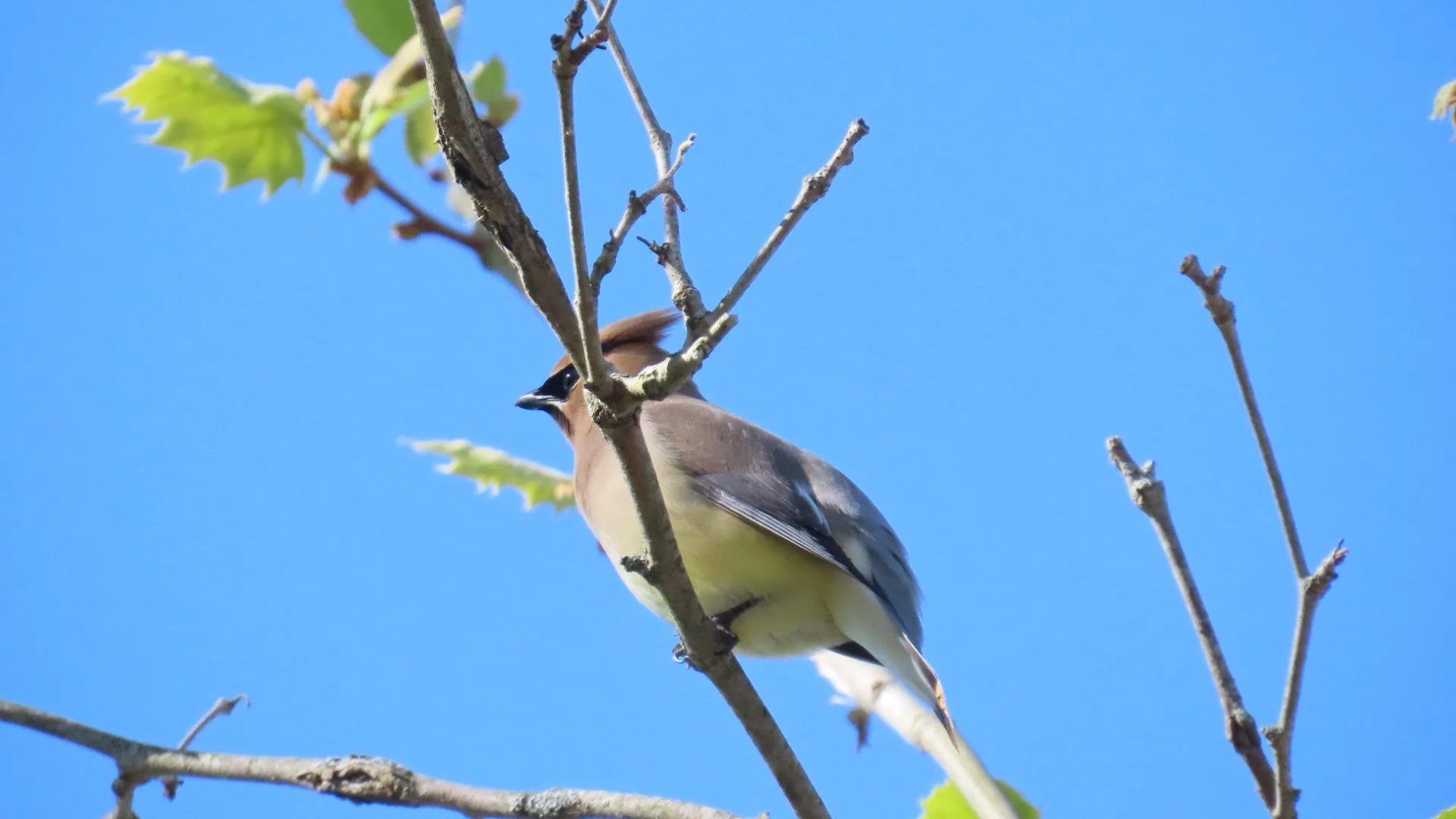
Cedar Waxwing
As we began our walk back under the shade of the Red Maples and Sycamore trees, we paused to admire the leaves of Jewelweeds, a native plant whose orange or sometimes yellow flowers act as an important food source for Ruby-throated Hummingbirds, including the one whom we saw perch on a high thicket before us. Cedar Waxwings moved overhead, their high “tsee, tsee” calls threading through the canopy, in sharp contrast to the rich songs of Baltimore Orioles and the buzzier songs of the Orchard Oriole. The Orchard Oriole, a lifer for at least one member of the group, drew excited attention. Its coloration and size differences from the abundant Baltimore Orioles, were eagerly noted by all: for instance, the striking orange of a male Baltimore Oriole compared to the rich chestnut underparts of a male Orchard Oriole, and the faint orange wash on the undersides of a female Baltimore Oriole compared to the olive-yellow plumage of the female Orchard Oriole. Luck was on our side that day, allowing us to easily note these observations and comparisons as we observed a young male Orchard Oriole sing from his perch in a towering Sycamore Tree – an important native to New York that thrives in riparian ecosystems and provides an excellent food source for a wide range of avian species. We reluctantly left the Oriole, wishing him luck, and offered goodbyes to the Spotted Sandpiper who continued foraging along the stream banks. A female Common Merganser, swimming upstream, paused to preen and observe us quizzically before eventually flying off.


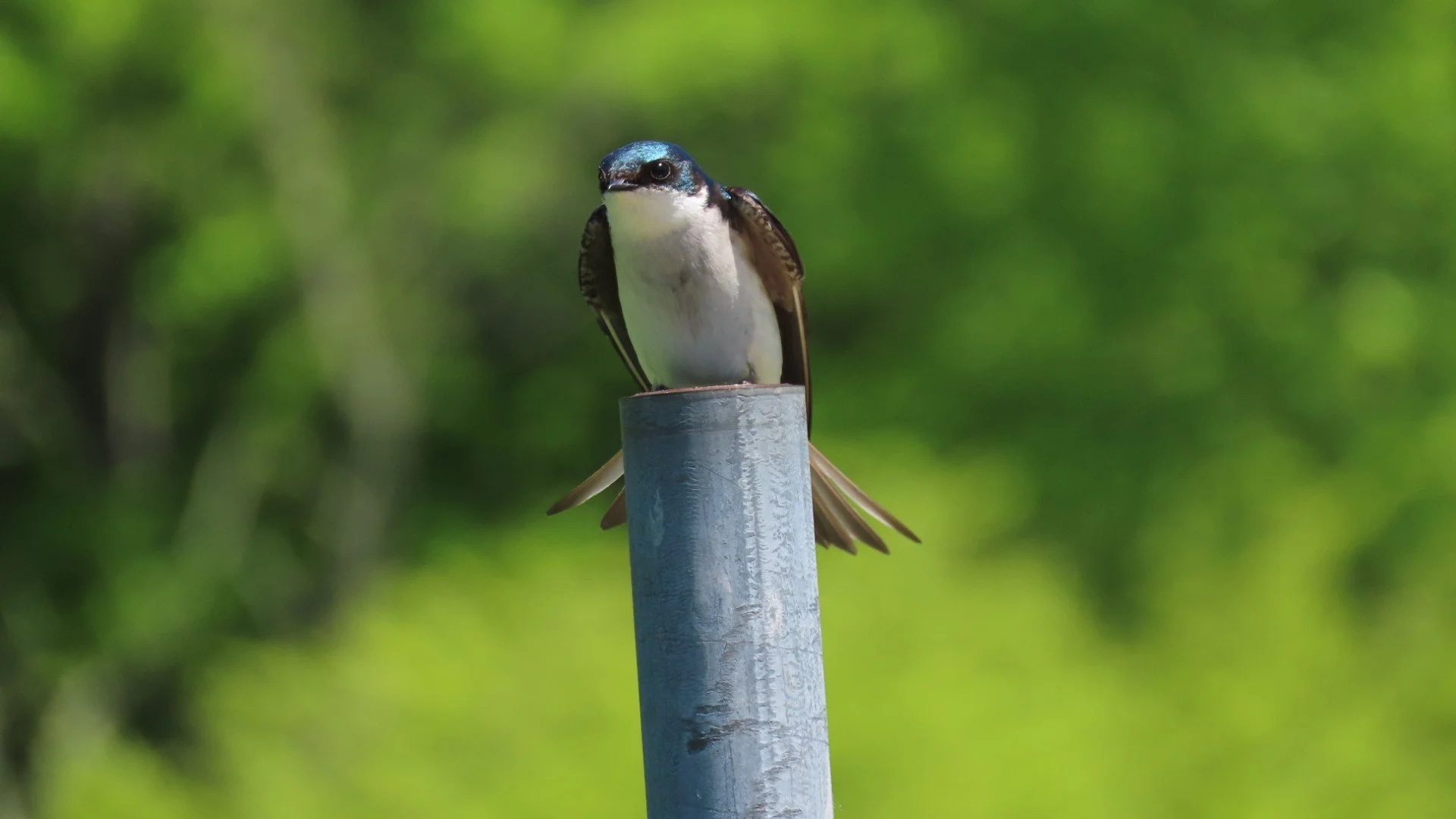
Tree Swallows
We then re-entered the grasslands, where Tree Swallows continued performing their aerial feats while catching insects to bring back to their nestlings. Arriving back at the parking lot bordered by tall spruce trees, we reflected on the multitude of feathered friends whom we observed despite the rising morning temperatures. We concluded our walk with a total of 54 avian species, alongside a rich diversity of flora, from Red Maples, Sycamores, and Asters to Wild Geraniums and various species of reeds.